
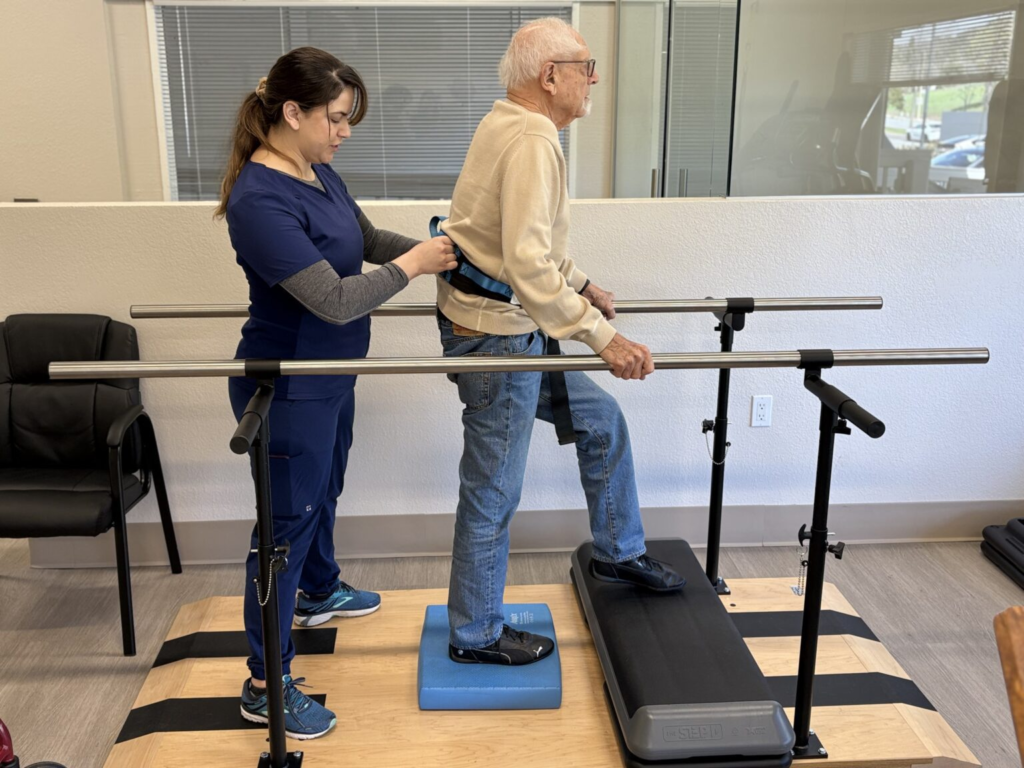
Balance therapy is a specialized form of physical therapy that targets the somatosensory, vestibular, and visual systems responsible for postural stability — using strength training, vestibular rehabilitation, gait training, and progressive balance exercises to reduce fall risk and restore functional independence.
Key Takeaways
- The CDC reports 36 million falls among adults 65+ in the United States every year — one in five results in a serious injury
- Patients who receive PT following a dizziness diagnosis experience an 86% reduction in fall rates up to 12 months later (APTA)
- Balance therapy treats three systems : somatosensory (proprioception), vestibular (inner ear), and visual — all must be assessed
- BPPV (benign paroxysmal positional vertigo) typically resolves within 1 to 3 sessions of canalith repositioning maneuvers
- Balance disorders affect all age groups, not only older adults — post-concussion, post-surgical, and vestibular patients of any age benefit from balance therapy
- Most patients attend 2 to 3 sessions per week for 4 to 8 weeks, with measurable stability improvements typically visible within 6 to 8 weeks
Balance is a foundational physical ability that governs every movement we make — rising from a chair, descending a staircase, walking on uneven ground, and navigating the ordinary demands of daily life. When balance is compromised, the consequences extend well beyond the risk of falling. Diminished stability leads to movement hesitancy, activity avoidance, reduced independence, and a measurable decline in quality of life.
At Reform Physical Therapy in Thousand Oaks, CA, our balance therapy program provides a clinically rigorous, evidence-based pathway to restored stability. Whether you are an older adult managing increasing unsteadiness, an individual experiencing dizziness or vestibular disturbances, or someone recovering from a neurological event, our licensed physical therapists design individualized programs calibrated to your specific deficits and goals.
What Does Balance Therapy Involve?
Balance therapy begins with a comprehensive clinical evaluation and progresses through a personalized, structured treatment program. A typical course of care includes:
- Formal balance testing : Using validated tools such as the Berg Balance Scale and Timed Up and Go (TUG) test to establish a baseline and track progress
- Strength and resistance training : Targeting quadriceps, hip abductors, ankle stabilizers, and core musculature
- Static and dynamic balance exercises : Progressing from stable standing positions to single-leg stance, tandem walking, and perturbation training on unstable surfaces
- Vestibular rehabilitation (VRT) : Gaze stabilization, habituation exercises, and canalith repositioning maneuvers for patients with dizziness or vertigo
- Gait training : Normalizing walking mechanics and practicing safe navigation of real-world challenges (stairs, curbs, uneven terrain)
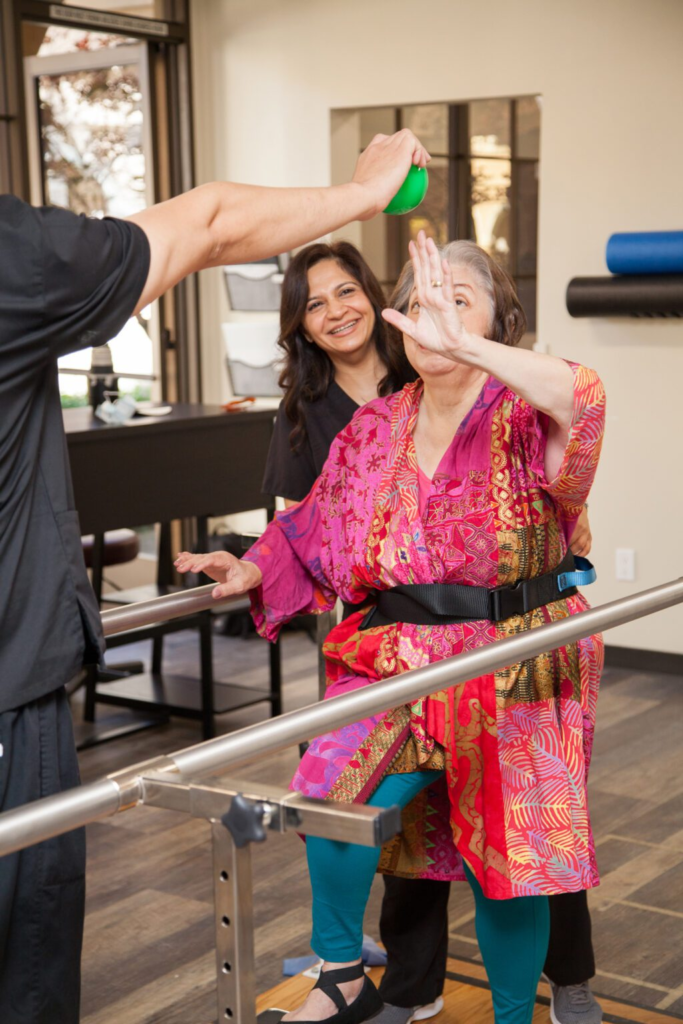
- Dual-task training : Combining balance activities with cognitive challenges to simulate real-world conditions where most falls occur
- Patient and caregiver education : Home safety modifications, appropriate footwear, and assistive device training
Sessions are typically conducted 2 to 3 times per week for 4 to 8 weeks, with home exercise programming running in parallel.
Who Needs Balance Therapy?
Balance therapy is indicated for a broad population, including:
Older Adults
- Adults 65+ with a documented fall history or fear of falling
- Individuals experiencing age-related declines in proprioception or lower extremity strength
- Post-hospitalization patients with deconditioning-related balance impairment
Individuals with Vestibular Conditions
- Benign Paroxysmal Positional Vertigo (BPPV)
- Vestibular neuritis and labyrinthitis
- Meniere’s disease
- Post-concussion vestibular dysfunction
Neurological and Medical Conditions
- Parkinson’s disease
- Multiple sclerosis (MS)
- Stroke survivors
- Peripheral neuropathy
Orthopedic and Post-Surgical Patients
- Post-hip or knee replacement
- Post-ankle surgery or fracture
- Patients with chronic lower extremity pain affecting gait mechanics
Balance problems are not exclusively a concern of older adults. Vestibular disorders, post-concussion sequelae, and post-surgical proprioceptive deficits affect people of all ages and warrant the same clinical attention.
The Scale of the Fall Risk Problem
Falls among older adults represent one of the most significant preventable public health challenges in the United States. According to the Centers for Disease Control and Prevention (CDC), 36 million falls are reported among adults 65 and older every year. One in five of those falls results in a serious injury — hip fracture, traumatic brain injury, or other orthopedic trauma. Falls are the leading cause of injury-related death in this age group.
Research demonstrates that patients who receive physical therapy following a dizziness diagnosis experience an 86% reduction in fall rates up to 12 months after treatment compared to those who do not receive PT. This positions balance therapy not merely as a reactive clinical intervention, but as one of the most effective preventive tools available for fall-related morbidity.
Falls are not an inevitable consequence of aging. They are frequently preventable with the right clinical intervention.
How Balance Therapy Works at Reform Physical Therapy
Every patient begins with a comprehensive evaluation by a licensed physical therapist:
- Gait analysis : Walking speed, stride length, step symmetry, and dynamic balance during ambulation
- Standardized balance testing : Berg Balance Scale, Timed Up and Go (TUG) test, and Four-Stage Balance Test
- Strength assessment : Lower extremity and core muscle strength, the primary contributors to postural stability
- Vestibular screening : Inner ear system assessment when dizziness, vertigo, or visual disturbance is present
- Medical history review : Medication use, fall history, neurological diagnoses, and visual impairment all inform the treatment plan
Vestibular Rehabilitation Therapy (VRT)
For patients with vestibular conditions such as BPPV, VRT employs gaze stabilization exercises, habituation exercises, and canalith repositioning maneuvers (CRM). The CRM is the clinical standard for BPPV and typically produces significant symptom resolution within 1 to 3 treatment sessions.
Dual-Task Training
A significant proportion of falls occur when attention is divided — walking while carrying objects, talking on the phone, or responding to an unexpected environmental change. Dual-task training incorporates cognitive and motor challenges simultaneously to simulate these real-world conditions and improve the automaticity of postural control.
Why Choose Reform Physical Therapy for Balance Therapy in Thousand Oaks?
Thousand Oaks and the Conejo Valley are home to a large and active older adult population. Reform Physical Therapy delivers individualized, one-on-one balance therapy with licensed clinicians who conduct a thorough assessment of every contributing system — not just a single exercise protocol applied generically to all patients.
- One-on-one sessions : Direct time with your licensed physical therapist at every visit
- Evidence-based tools : Validated clinical assessments and treatment protocols
- Vestibular specialty care : Assessment and treatment of inner ear-related dizziness and vertigo
- Caregiver involvement : Education and home safety guidance for patients and their families
Frequently Asked Questions About Balance Therapy
What does balance therapy involve? Balance therapy involves a comprehensive clinical evaluation followed by a personalized program of strength training, static and dynamic balance exercises, vestibular rehabilitation (for dizziness and vertigo), gait training, and dual-task training. Sessions are conducted by a licensed physical therapist 2 to 3 times per week, typically for 4 to 8 weeks, with home exercise programming throughout.
How do I know if I need balance therapy? You may need balance therapy if you experience frequent unsteadiness or stumbling, have had one or more falls in the past year, feel dizzy or notice the room spinning with position changes, feel fearful of falling during daily activities, or have a condition such as Parkinson’s disease, stroke, or peripheral neuropathy that affects movement. A licensed physical therapist can perform a formal balance assessment to determine your fall risk and whether therapy is indicated.
How long does balance therapy take? Most patients attend 2 to 3 sessions per week for 4 to 8 weeks. BPPV patients often experience significant symptom resolution within 1 to 3 sessions following canalith repositioning maneuvers. Broader fall prevention programs typically show measurable improvements in stability within 6 to 8 weeks of consistent therapy.
Can balance therapy cure vertigo? For BPPV — the most common cause of vertigo — canalith repositioning maneuvers resolve symptoms in the majority of patients within 1 to 3 sessions and are the clinical standard of care. For other vestibular conditions such as vestibular neuritis or labyrinthitis, vestibular rehabilitation significantly reduces dizziness and improves daily function, though outcomes depend on the specific diagnosis and severity.
Is balance therapy only for older adults? No. While older adults carry the highest statistical fall risk, balance therapy is appropriate for all ages. Athletes recovering from ankle injuries, individuals post-concussion, post-surgical patients with reduced proprioception, and people with vestibular conditions are all candidates regardless of age.
What causes poor balance in older adults? Poor balance in older adults results from multiple interacting factors: age-related muscle weakness (sarcopenia), reduced proprioceptive sensitivity, declining vestibular function, visual impairment, medication side effects — particularly sedatives and antihypertensives — and residual effects of conditions such as diabetes, stroke, or Parkinson’s disease. Physical therapy directly targets the modifiable contributors to balance decline.
Reclaim Your Stability with Balance Therapy at Reform Physical Therapy, Thousand Oaks
Unsteadiness, dizziness, and fear of falling should never be accepted as inevitable. With a clinically precise balance therapy program designed and delivered by a licensed physical therapist, meaningful improvement in stability, confidence, and independence is achievable at any age.
Call Reform Physical Therapy today to schedule your balance therapy evaluation in Thousand Oaks:
📞 [(805) 383-0470]
Our licensed physical therapists are ready to design a personalized program that addresses your specific balance deficits and supports a safer, more active life.